ELA Overview
🔬Grounded in the Science of Reading and NYC Reads

A reader needs both strands, practiced and woven together, to read fluently and understand what they read — strength in one cannot substitute for weakness in the other.
New York City Public Schools launched NYC Reads, a citywide effort to align every elementary school's literacy instruction with this research: schools must adopt one of a small number of vetted, knowledge-building core ELA curricula — EL Education, Wit & Wisdom, or HMH's Into Reading — and pair it with dedicated, systematic phonics and foundational-skills instruction in the early grades.
STEAM Bridge's ELA model mirrors this two-part design. EL Education, our core K–5 curriculum, supplies the language-comprehension side of the rope. Fundations and Heggerty supply the word-recognition side for our K–2 students. Together, these programs give STEAM Bridge students both halves of what the research shows skilled reading requires.

🗺️ Our ELA Foundation: EL Education
At STEAM Bridge, students in Kindergarten through Grade 5 learn ELA through EL Education, still often referred to by its founding name, Expeditionary Learning (EL). EL Education treats literacy and content knowledge as inseparable: instead of disconnected worksheets or short passages, students spend several weeks immersed in a single compelling topic — called a module — drawn from science, social studies, or literature.
Each module is organized around a driving question and a set of complex, authentic texts. Comprehension depends heavily on how much a reader already knows about a topic — a student who already knows something about frogs, the American Revolution, or human rights can read new texts on that topic more fluently and build vocabulary faster. EL Education calls this a "knowledge-building" approach: by teaching literacy skills through rich, coherent content, students become stronger readers and more knowledgeable, curious people.
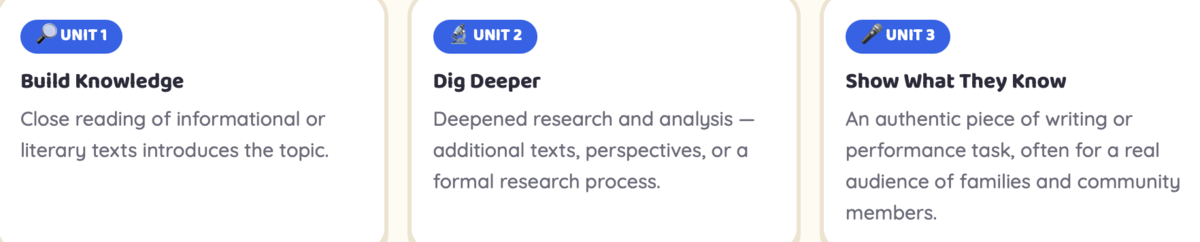
Most modules move through a similar three-unit arc:
Woven through every module are EL Education's "Habits of Character" — the expectation that students work not only to become skilled readers and writers, but also effective learners, ethical people, and contributors to a better world.
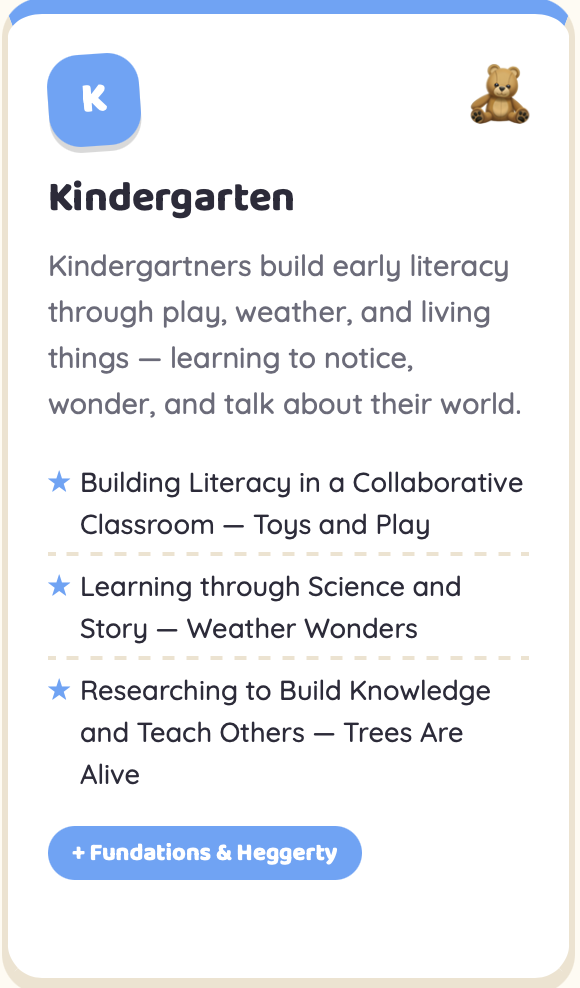
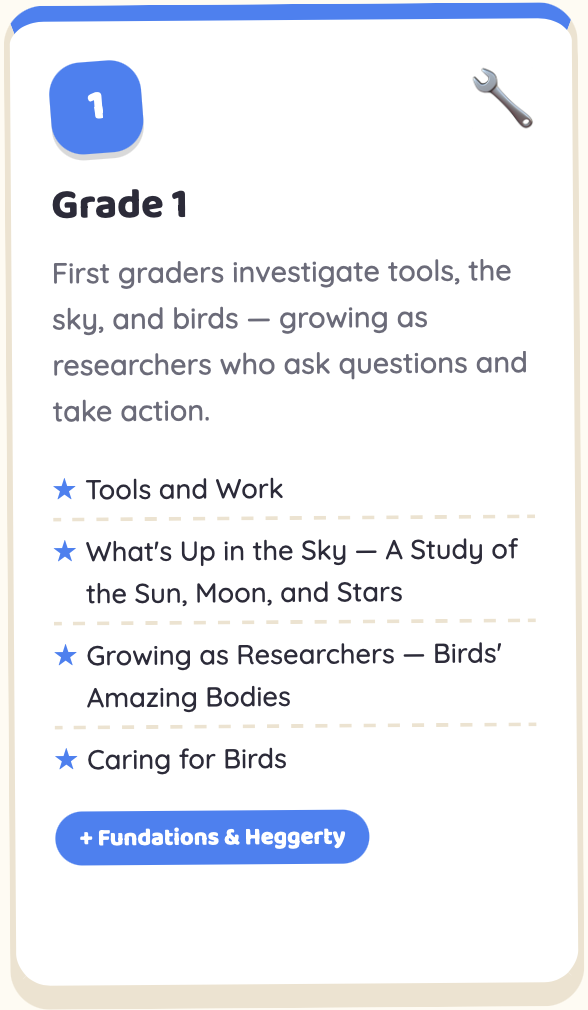
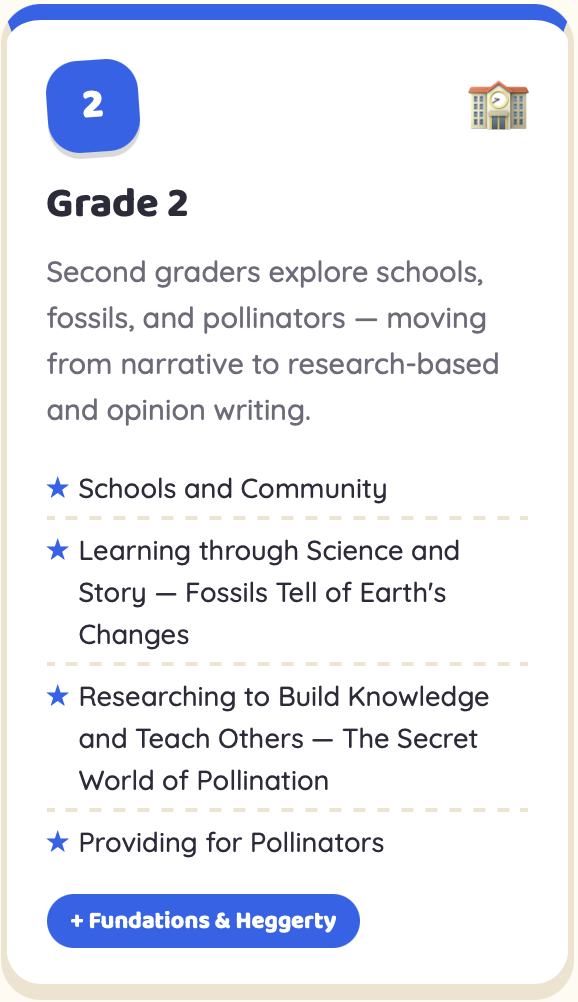
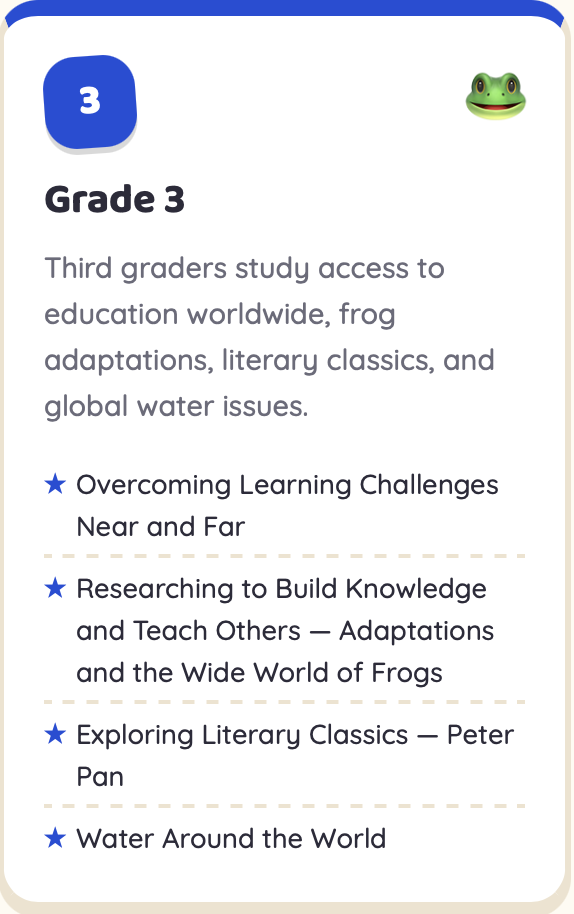
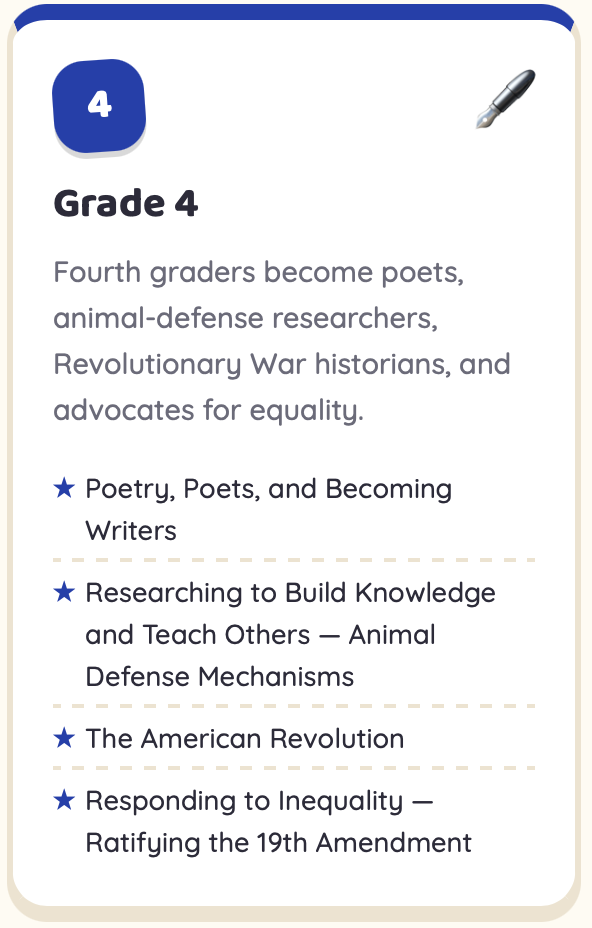
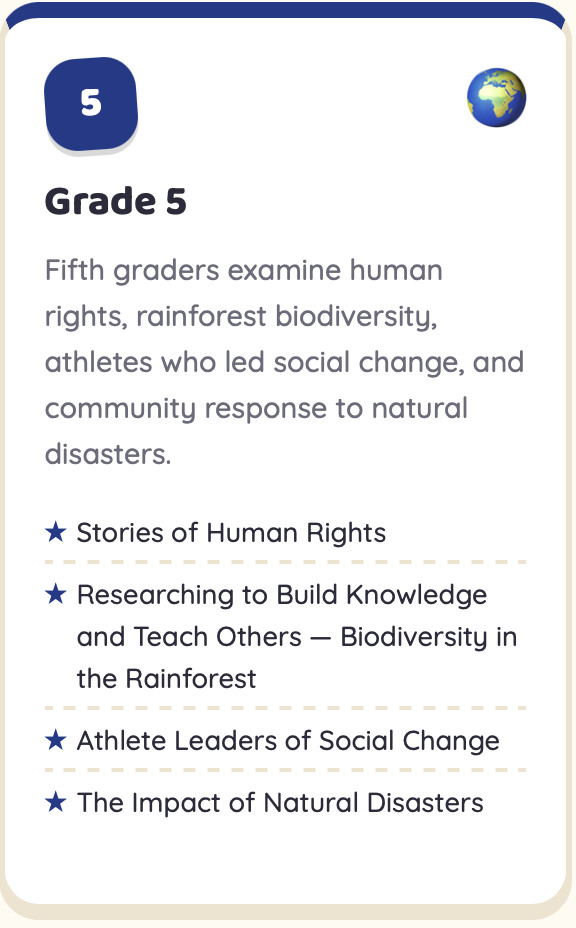
🎈Yearly Overview — Click a Grade
Here's what each grade studies across the year. Click any grade below to see its unit-by-unit breakdown.